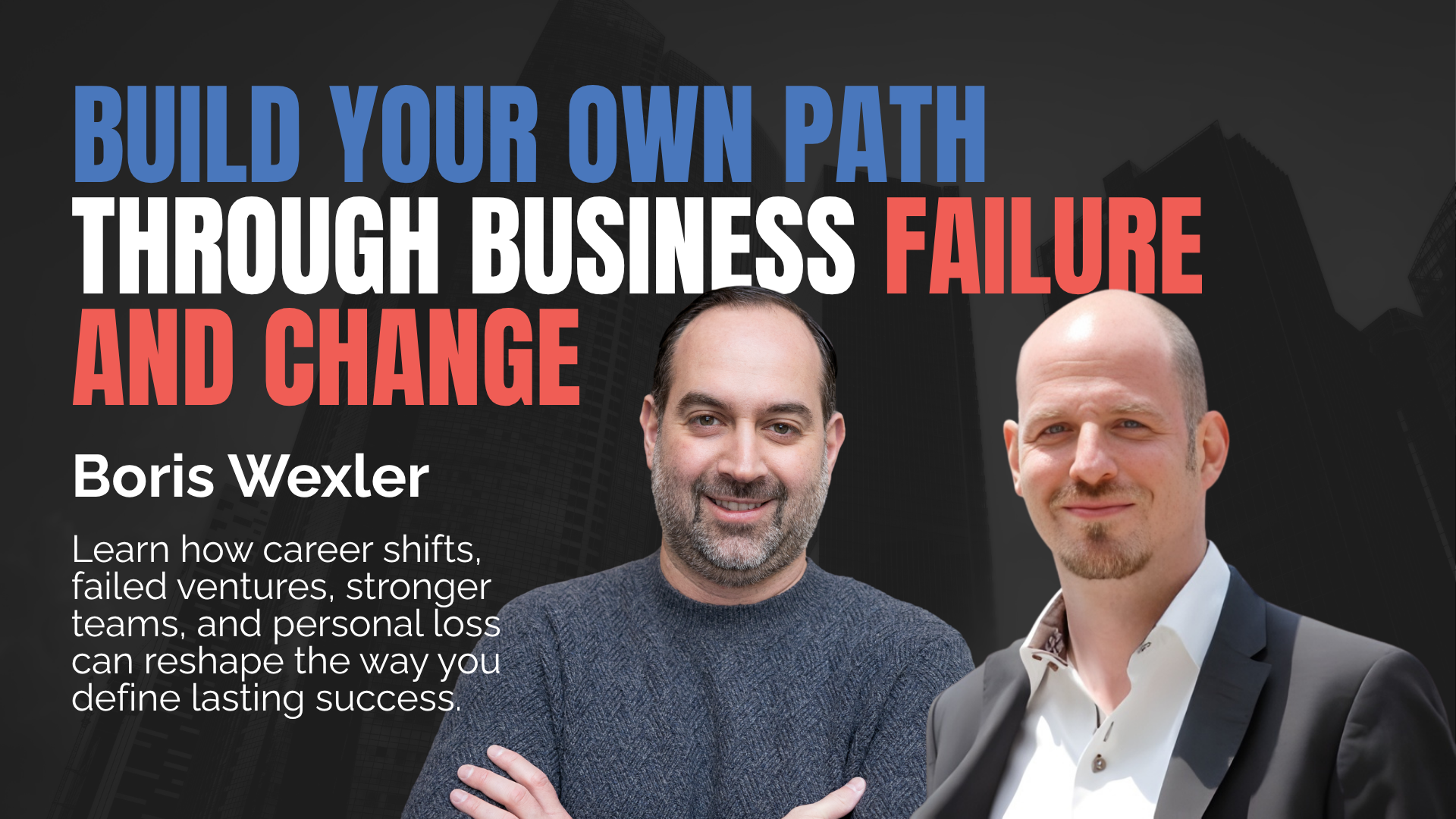
Boris Wexler grew up in Paris with a strong academic focus and a clear path toward science. However, his interests stretched far beyond engineering. He loved movies, art, and creative work, but he didn’t initially see them as realistic careers. That tension shaped his view of entrepreneurship and personal choice. Eventually, Boris left France’s rigid preparatory school system after challenging how he was expected to learn. Soon after, he moved to the United States and completed his education at Washington University in St. Louis.
Boris on Experimentation Failure and Reinvention
After college, Boris entered technology consulting before returning to France and launching his first company. Although the venture raised meaningful funding, it struggled when the dot-com collapse erased much of its customer base. Meanwhile, losing his mother forced Boris to reconsider what success actually meant to him. He returned to Chicago and explored trading, furniture retail, filmmaking, and other ventures. Therefore, his path through entrepreneurship became less about following one plan and more about learning through experience. Eventually, he returned to technology and rebuilt a more stable professional foundation.
The Unexpected Road Back to Entrepreneurship
Later, Boris joined Move Web and helped build its professional services operation. The company changed ownership before its parent organization entered bankruptcy in 2024. As a result, Boris suddenly faced another major career decision. Instead of waiting for someone else to determine the outcome, he and three coworkers created a new company. Their customers chose to follow them, which gave the team a foundation for Space Dinosaurs. That experience reinforced Boris’s belief that entrepreneurship requires persistence, timing, relationships, and decisive action.
What Wexler Learned About Leadership
Today, Boris sees leadership differently than he did during his first business. Earlier in his career, he often believed his own approach should lead every decision. However, experience taught him that strong companies depend on motivated people who feel heard. Consequently, he now values collaboration, careful hiring, and shared ownership of results. His perspective on entrepreneurship also includes accepting responsibility for both mistakes and successes. Still, he doesn’t describe business ownership as an easier lifestyle. He works constantly and carries greater responsibility. Yet the ability to control his direction matters deeply to him. Ultimately, Boris believes young people should consider entrepreneurship while they have room to experiment. The larger lesson is simple. Learn quickly, surround yourself with good people, and make deliberate choices about the life you want.