Why Haren Looks at Who Owns the Company
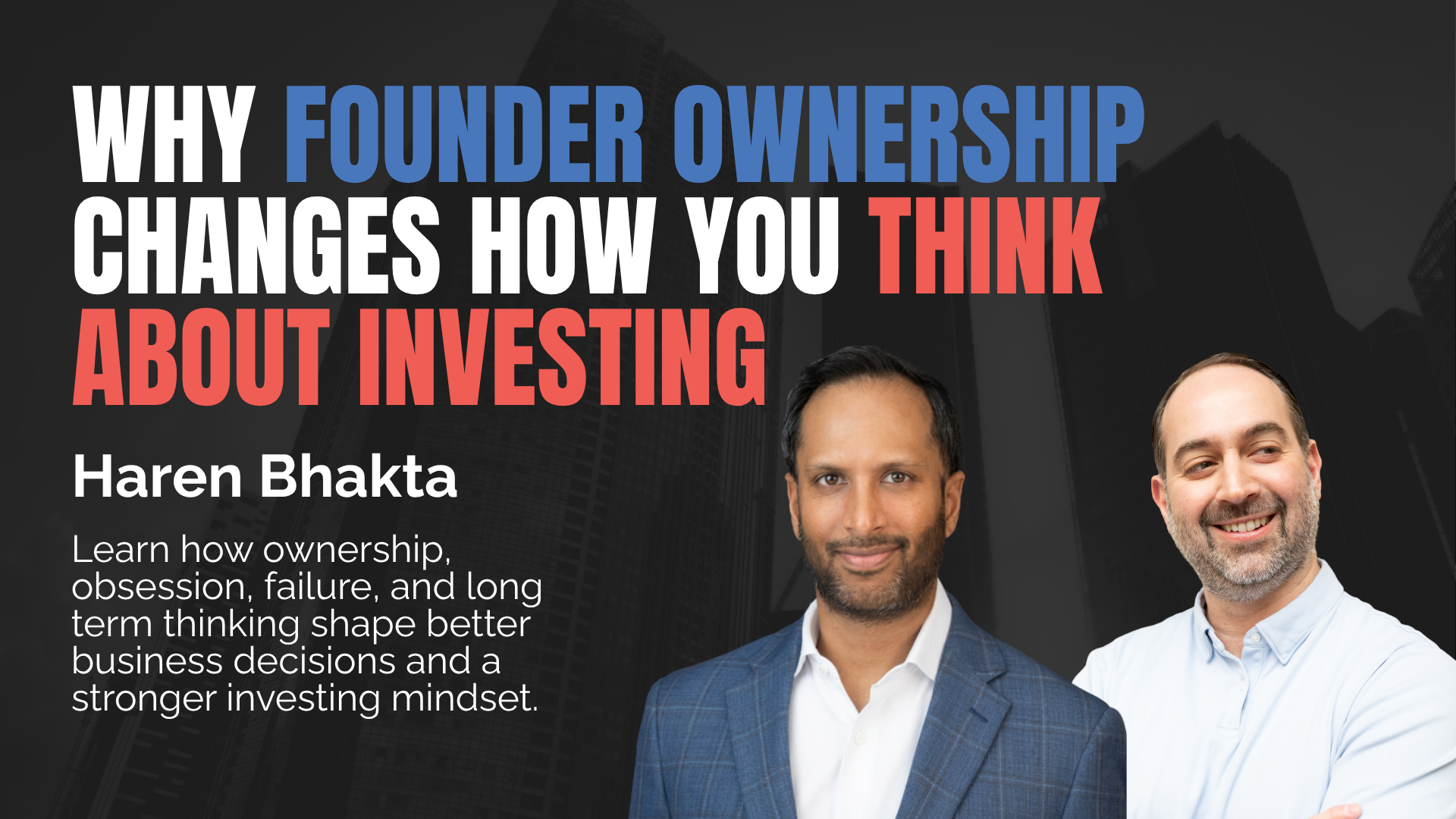
We open with a simple investing question. Who actually owns the companies that investors trust with their money? Haren explains why founder ownership shapes how he evaluates public companies. Specifically, he looks for leaders with meaningful personal stakes in the businesses they run. As a result, those leaders feel both the upside and downside of their decisions. He also explains how Warren Buffett inspired his thinking about ownership, leadership, and long-term investing.
Bhakta on Skin in the Game
Next, we explore why personal risk can change how leaders behave. Haren argues that founder ownership creates stronger alignment between company leaders and outside shareholders. Therefore, leaders with significant stakes may think differently about risk, culture, and long-term decisions. He connects this idea to skin in the game, a concept that strongly influenced his career. Moreover, he explains why obsession can matter when someone builds something difficult.
Lessons From Growing Up in a Motel
Then, the conversation shifts to Haren’s childhood in Orange County, California. His parents owned and operated a motel, so business surrounded him from an early age. Consequently, he watched them handle customers, employees, expenses, and constant interruptions. He also helped clean rooms and saw how demanding ownership could become. However, those experiences taught him about work, family, responsibility, and entrepreneurship. Later, he discovered the stock market in college and developed another intense interest.
Haren Bhakta on Activist Investing
After working in insurance, Merrill Lynch, and Morgan Stanley, Haren wanted greater control over his investment decisions. So, he began investing in smaller public companies where he could influence operations. He explains how founder ownership also relates to accountability when management controls company resources. Eventually, he joined the board of a Las Vegas ticket business and helped acquire it after bankruptcy. Along the way, he learned how difficult shareholder activism can become.
What Compounding and Failure Teach
Finally, we discuss patience, failure, and how people build wealth over time. Haren favors regular index investing because constant decisions can damage long-term results. Likewise, he believes founder ownership can reveal how strongly leaders share the consequences of their choices. He also explains why entrepreneurs shouldn’t fear failure when they’re trying to create something useful. Ultimately, founder ownership connects many parts of this conversation, including accountability, risk, purpose, and long-term thinking.