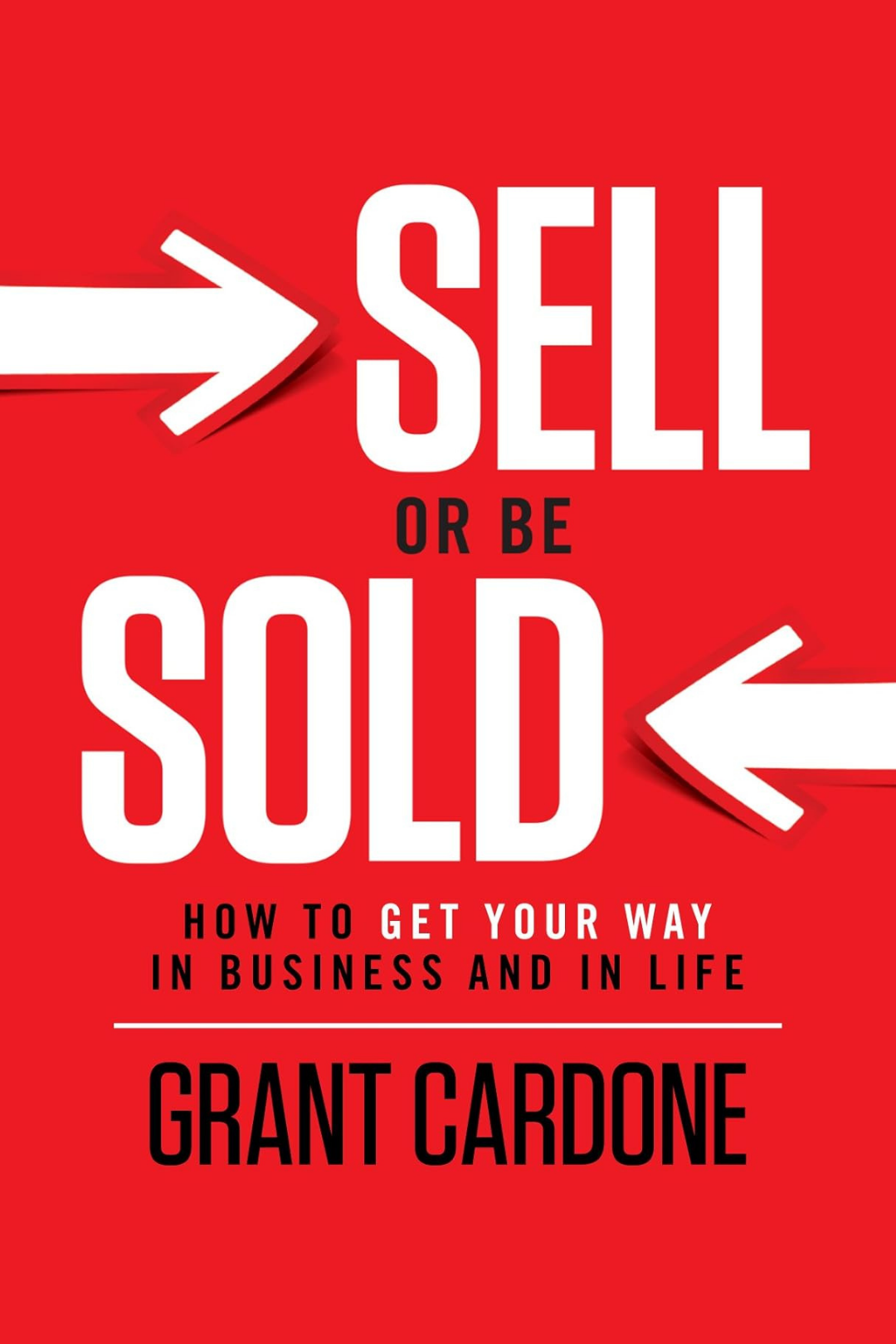
If you’ve picked up Sell or Be Sold by Grant Cardone, you’ve already felt that itch. That pull to stop second-guessing your ideas and actually get people on board with them. Whether it’s closing a client, pitching your boss, or convincing your kid to eat broccoli, the game’s the same. Either you’re doing the selling, or you’re being sold on something else.
The trouble is, most people still think selling is only about pushing products. Or they picture a slick guy in a shiny suit cold-calling strangers and playing mind games. That myth alone keeps so many smart people stuck. They downplay what they offer, fumble through awkward pitches, or worse, avoid selling altogether and watch someone less qualified take the spotlight.
What makes this book different is how it reframes selling into something real and necessary. Not sleazy. Not manipulative. Just part of life. And yeah, it’s a little intense in spots. Cardone’s not subtle. But if you’re tired of sitting on great ideas and watching them go nowhere, this one might wake you up in the best way.
Fast Talk: What This Book Really Teaches
- You’re selling every day, whether you know it or not
- If you’re not confident in your offer, no one else will be
- Selling isn’t about tricks, it’s about belief
- Most people think they’re bad at sales, but they’ve just never learned it right
- You can’t wait to “feel ready” to pitch or promote
- Selling is a skill you build, not a trait you’re born with
- The economy doesn’t decide your success, your mindset does
- To grow anything, you have to learn how to move people
“I’m Not a Salesperson” Is Just Fear in a Cheap Hat
You hear it all the time. “I’m not really a salesperson.” Or, “Selling makes me uncomfortable.” That’s like saying you’re not a runner so you’re gonna skip the fire drill. If you’ve ever convinced your roommate to go Thai instead of pizza, you’ve sold. The only real difference is awareness.
The myth that only certain personalities can sell holds people back more than a bad script ever could. Truth is, most great sellers don’t start that way. They learn how to listen. They study objections. They practice staying calm when someone says no. You don’t have to change who you are. You just have to get serious about learning.
And in Sell or Be Sold, that’s the slap-in-the-face message. You don’t have time to wait for comfort. If you believe in what you do, you owe it to yourself to get it into people’s hands. Cardone’s style might rattle you, but the core idea is simple: hesitation costs you.
Real Talk from a Reader Who’s Been There
Picture this. You’ve built something. Maybe it’s a service, maybe it’s a product, maybe it’s just a big idea. You show it to a friend, they nod, say it’s cool. Then silence. Weeks pass, nothing happens. You start to wonder if maybe it wasn’t that great after all.
That was me. I had a coaching offer I knew could help people, but every time I talked about it, I sounded unsure. I danced around the price. I waited for people to ask instead of putting it out there. Then I read Sell or Be Sold and one sentence cracked me open: “If you don’t believe in your product enough to pitch it every day, why should anyone else believe in it enough to buy?”
So I started pitching. Not yelling. Not pushing. Just sharing. I talked about it like it mattered. And suddenly, people started listening. Not because I got louder, but because I got clearer.
Here’s the Part They Don’t Tell You in School
What gets people to say yes isn’t charm. It’s certainty. That’s the real heart of Sell or Be Sold. The book hammers this one idea over and over: people follow those who seem sure. Not the smartest. Not the slickest. The ones who speak like they mean it.
And the way you get certain is by doing the work. Practicing. Pitching. Failing. Trying again. Cardone’s system is built on repetition. He’s got chapters on handling objections, building belief, keeping your pipeline full, and even how to stay positive when everything feels stuck.
Here’s what stood out:
- Confidence isn’t optional, it’s the whole pitch
- The biggest sale you’ll ever make is to yourself
- Objections aren’t rejections, they’re invitations to explain
- The economy doesn’t matter if you’re creating your own demand
- Every no gets you closer to a yes
The writing style? Aggressive but useful. Like a trainer yelling at you in a way that somehow works.
Not Just for Closers and Commission-Hunters
One weird thing: the book works even if you’re not in business. Teachers, parents, leaders, freelancers, artists. If you’ve ever needed someone to take you seriously or support what you do, these ideas apply.
Let’s break that down with a quick comparison:
| Common Situation | How This Book Helps |
| Pitching your boss an idea | Teaches you how to frame value clearly |
| Asking for a raise | Helps you build belief before the ask |
| Starting a side hustle | Shows you how to talk about your offer |
| Getting more clients | Gives tools to follow up without fear |
| Convincing your teen to study | Builds your patience and persuasion skills |
Selling is life. The sooner you stop seeing it as manipulation, the sooner you start moving forward.
So You Wanna Win? Start Talking Like You Mean It
It’s not about pushing harder. It’s about believing more. Selling becomes easy when you stop treating it like a trick and start treating it like a service. If someone truly needs what you offer and you stay silent, that’s not humility. That’s selfishness.
You don’t have to become someone else. Just become the version of you who’s not afraid to ask.
Still feeling stuck or unsure how to talk about what you do? GRAB A COPY and start reading!
Read, Apply, Repeat: Sales Lessons That Stick
- You sell every day, even when you think you’re not
- Confidence sells more than credentials ever will
- The biggest thing you have to sell is yourself
- Belief isn’t a mindset, it’s a practice
- Don’t wait to be ready, start where you are
- Certainty moves people more than logic
- Every no is a lesson, not a loss
- Selling is how you serve, not how you manipulate
If Sell or Be Sold makes anything clear, it’s this: nobody’s gonna care more than you. You can learn to pitch. You can learn to close. But first, you have to learn to believe.