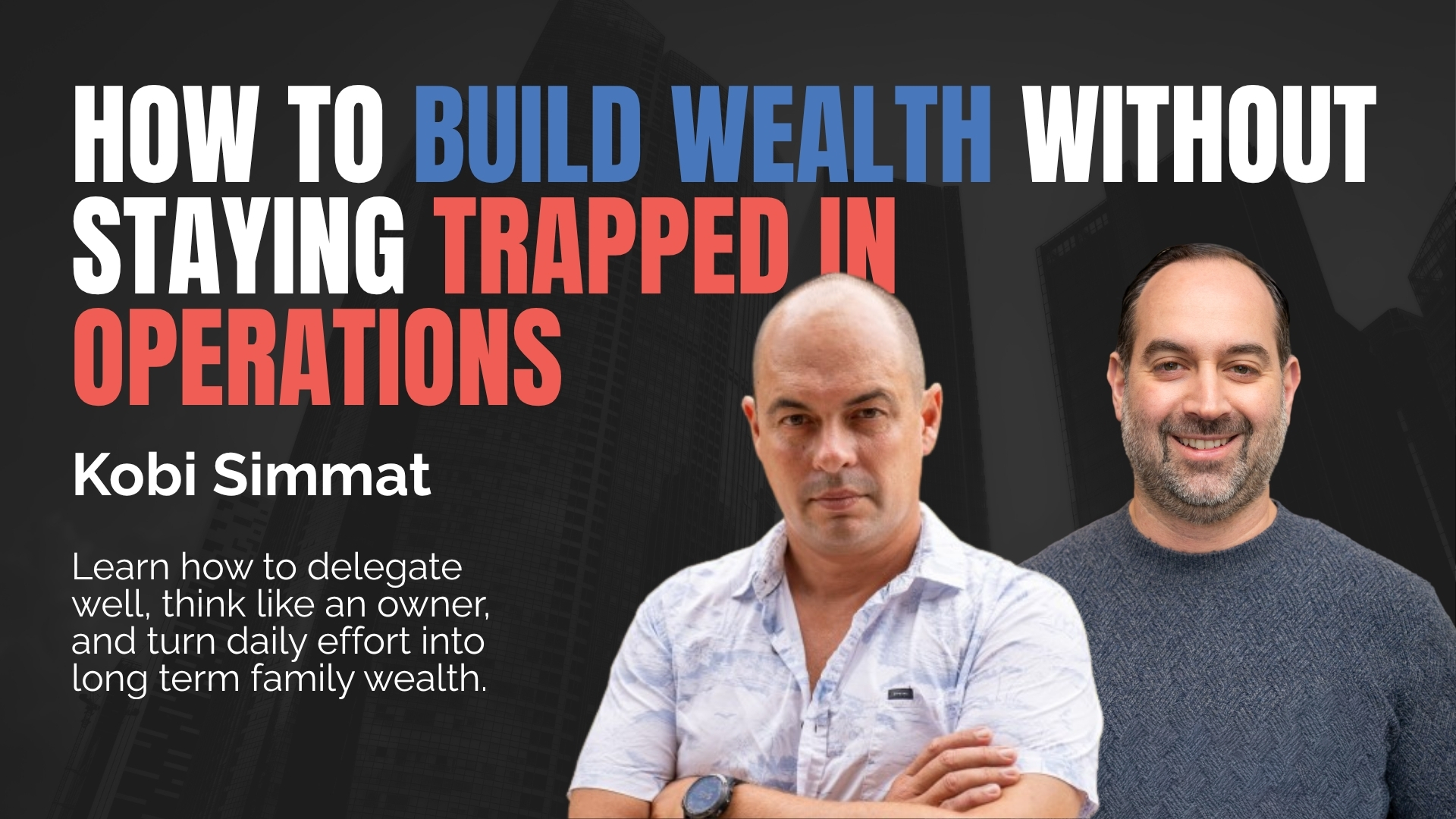
Kobi grew up in Sydney around national parks, beaches, boats, and building sites. So, work never sat in a separate box from life. His father ran an architecture and construction business, and the family often joined site visits on weekends and holidays. That early exposure shaped how he saw business, responsibility, and momentum. He didn’t describe entrepreneurship as glamorous. Instead, he saw it as a path to a more active and intentional life. That view frames the whole conversation around wealth creation.
Why Kobi Simmat values ownership
He explains that many people wait to feel inspired before they move. However, he believes people can learn to become passionate through action. He also argues that earning years are limited, so building resources for your family can’t stay optional. That idea drives his view of wealth creation. He talks openly about family roles, duty, and the need to prepare the next generation. As a result, this episode becomes less about status and more about stewardship.
Kobi also shares how school never fit the way he learned. He showed up, paid attention, and still struggled in a traditional classroom. Then everything changed in technical college, where discussion replaced rote repetition. From there, he became a top student and found a learning style that worked. So, one of the clearest lessons here is simple. You still need education, but you must learn how to learn.
The lesson Kobi Simmat would pass on
Later, he walks through the business he built in construction consulting. His company helped contractors meet government standards in safety, quality, environment, and risk. The model created recurring revenue, long client retention, and a clear service structure. Yet the deeper lesson isn’t only about systems. It’s about leaving the technician role before it traps you. That shift matters because wealth creation gets harder when the owner stays buried in delivery.
He tells a great story about finding a book in an airport called How to Grow Your Business by Taking Three Months Off. That idea pushed him to document work, delegate tasks, and step away. Then he actually left for South America for three months. Even during the global financial crisis, the business kept moving because the team had ownership. So, the episode turns delegation into a practical tool for wealth creation, not a soft leadership idea.By the end, Kobi makes a strong distinction between being a technician, a coach, and a shareholder.
He believes too many founders stay attached to being the best operator. However, real progress starts when they train others, let people make small mistakes, and think like owners. That transition is central to wealth creation because it creates space, leverage, and long term value. We also hear how he brought forward years of earnings by selling his company, and why that sale fit his larger plan for family wealth, learning, and responsibility.