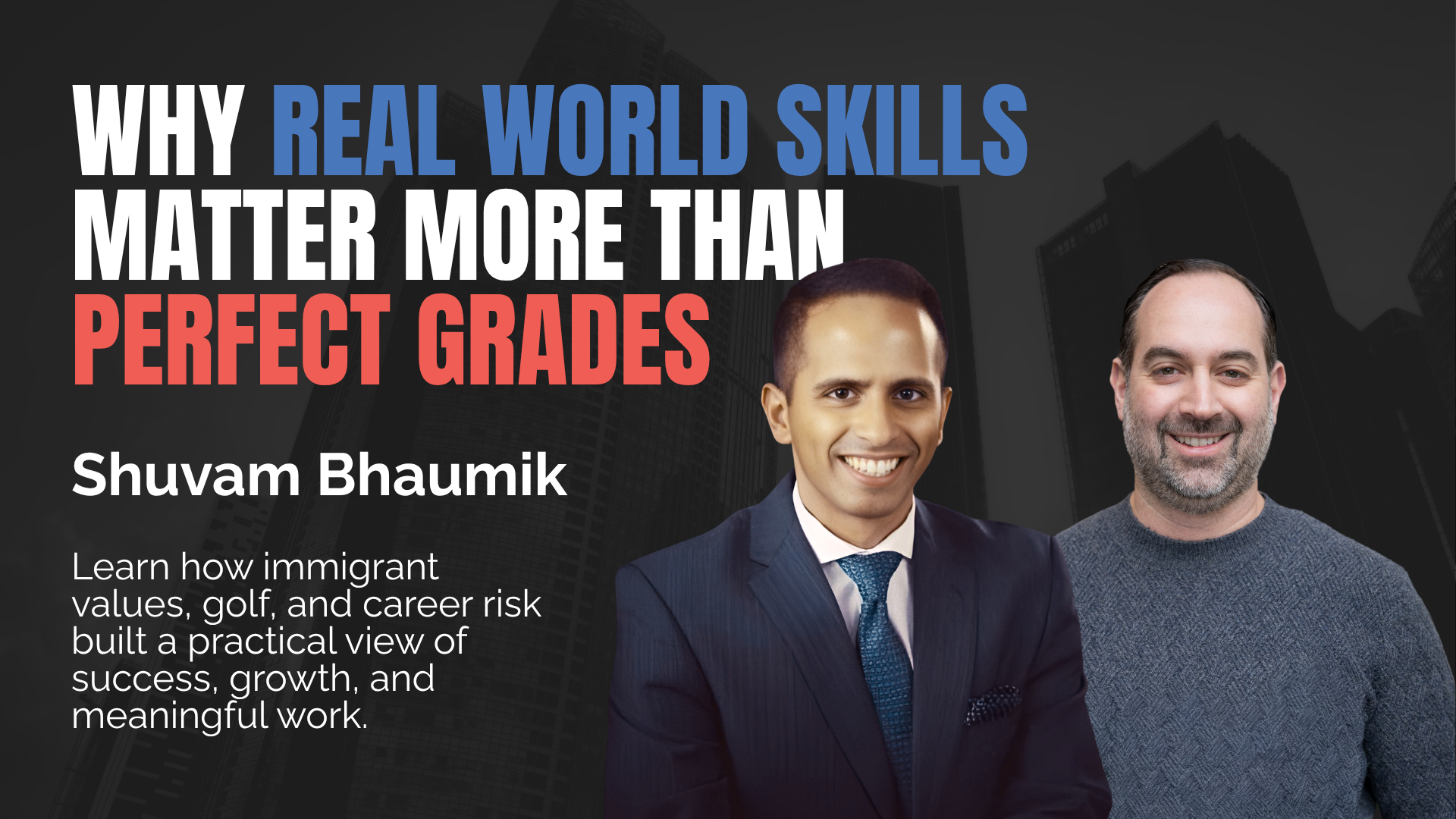
We sat down with Shuvam Bhaumik to trace the early forces that shaped his career path. He grew up in Brooklyn between Borough Park and Bay Ridge. So, he learned to adapt early. At first, he lived inside a largely Hasidic Jewish neighborhood. Later, he moved into a more mixed part of Brooklyn. Because of that shift, he saw how culture, community, and identity can shape a person. He also shared how his parents came from India, moved through Libya, and built a life in New York. They didn’t frame their story as struggle. Instead, they saw America as an upgrade. That view shaped how he thinks about gratitude, work, and a steady career path.
How Bhaumik found direction
School didn’t grab him in the usual way, yet curiosity always did. He said he liked learning, but not the way schools taught it. Then golf changed his career path in an unexpected way. A high school teacher pulled him onto the golf team, and that opened a door. Soon after, a business class called Virtual Enterprise changed how he saw work. He learned that business could offer more than a standard job. He could create, lead, sell, and think for himself. That mattered. He earned a golf scholarship to Long Island University, but the experience felt rigid. So, he started questioning whether that career path still fit. Eventually, a CEO in finance offered him a chance to work. He took it, even though the move came with risk, tension, and family fallout.
What Shuvam learned at work
Once he entered finance, the classroom gave way to real experience. He learned sales, cold calling, product knowledge, and how to read people. As a result, his career path became practical and self-directed. He moved from New York to the Boston area and kept building in wealth management. He later joined Morgan Stanley, yet he realized the big corporate structure limited his voice. Meanwhile, golf kept opening relationships and opportunities. That led him toward a family office role with an international client. Throughout the conversation, one theme stayed clear. Grades matter, but only to a point. He argued that schools should teach conflict resolution, communication, and sales with more urgency. Those skills shape a stronger career path because they prepare people for real work. That final point gives this episode its edge. We’re not just talking about jobs. We’re talking about judgment, resilience, and how people build a useful career path over time.