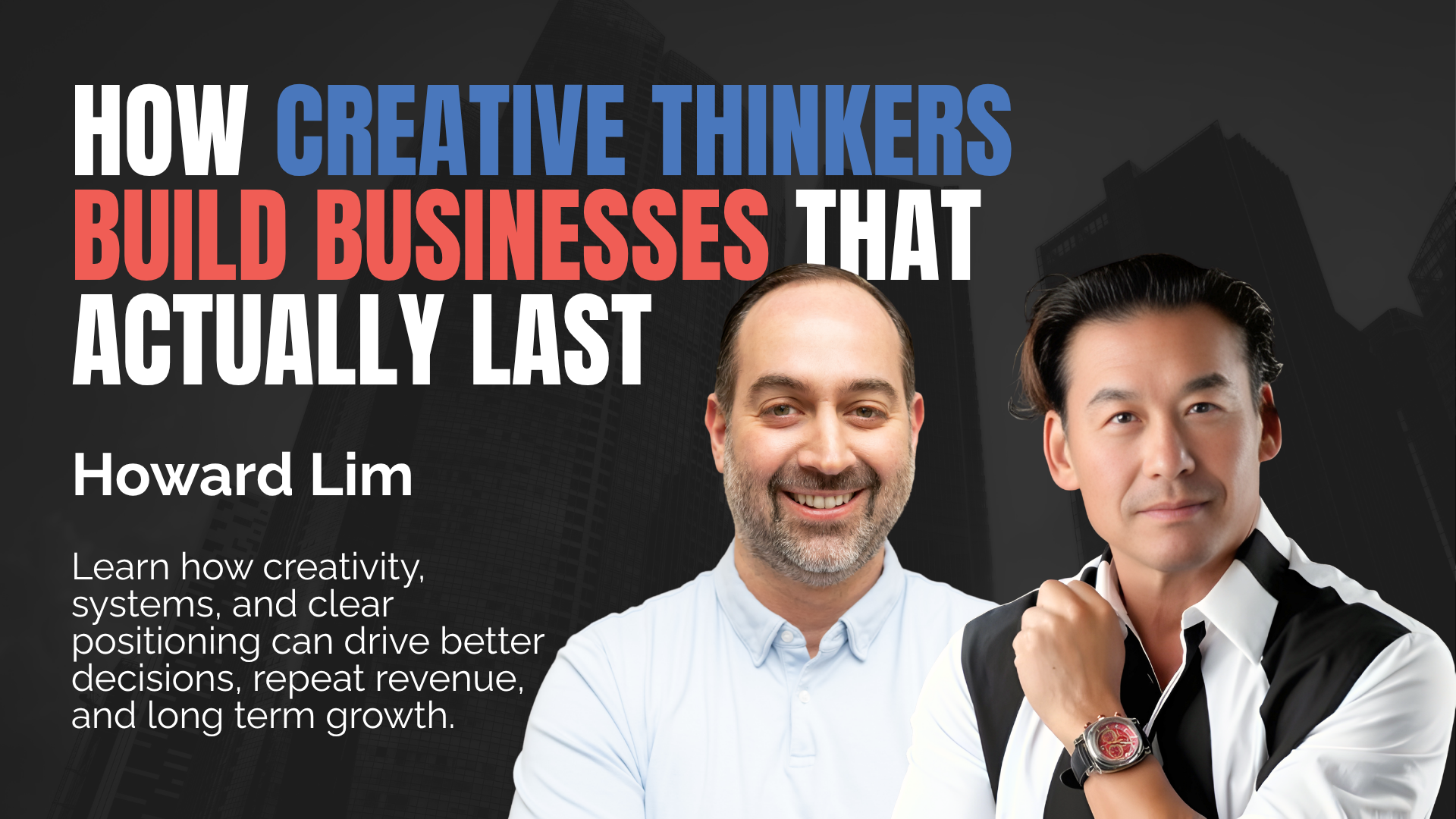
Howard Lim takes us back to Santa Barbara, where he grew up with eight siblings after being born in Manitoba. He describes a loud, active home, yet he also explains how shy he felt as a kid. School often bored him. However, art gave him focus early. At five, finger painting showed him a path. Soon, teachers noticed his unusual sense of perspective and pushed his work forward. That early gift shaped his identity, and it also started his habit of creative problem solving.
Lessons Howard Carried Forward
As the conversation moves into school and college, Howard explains how dyslexia affected the way he learned. For years, he thought something was wrong. Later, he discovered that the same wiring also sharpened his creativity. That insight changed how he viewed himself. Instead of forcing himself into a narrow system, he learned to trust creative problem solving. He also shares a key moment with his parents. His mother wanted stability. His father said, “Do what you love.” That support pushed him toward design, and then toward Cal Poly, where he got serious about his work.
Risk Builds Range
We also get into surfing, free climbing, and the drive to test limits. Howard connects those experiences to entrepreneurship in a direct way. For him, both require practice, instinct, and commitment under pressure. He says hesitation can ruin the moment, whether you’re on a wave or building a company. That mindset runs through the entire episode. He keeps pushing to see what’s possible, not to impress others, but to prove it to himself. As a result, creative problem solving becomes less of a tactic and more of a personal standard.
Building Brands the Howard Way
From there, Howard walks through his early career, his move into advanced computer based design, and the launch of How Studios, now How Creative. He explains how he saw potential in the Macintosh long before most companies understood it. Then he used that edge to help create work tied to DVDs, motion graphics, the web, and major brand systems. He didn’t become an entrepreneur because it sounded exciting. Instead, he saw broken systems and believed he could build better ones. That belief came from creative problem solving, and it stayed central as his company grew.
Systems That Make Growth Real
The final stretch shifts into AI, pricing, failure, and why most businesses stall. Howard argues that many founders focus too much on revenue and not enough on business design. He talks about systems, repeat business, brand clarity, and the need to build something that doesn’t depend on the founder forever. He also explains how AI fits into that work. In his view, great tools still need skilled direction. So the real advantage comes from strong thinking, clear language, and creative problem solving. By the end, this episode offers a grounded lesson in resilience, structure, and long term growth.
More From Howard Lim
https://www.howcreative.com/
https://www.linkedin.com/in/howcreative/