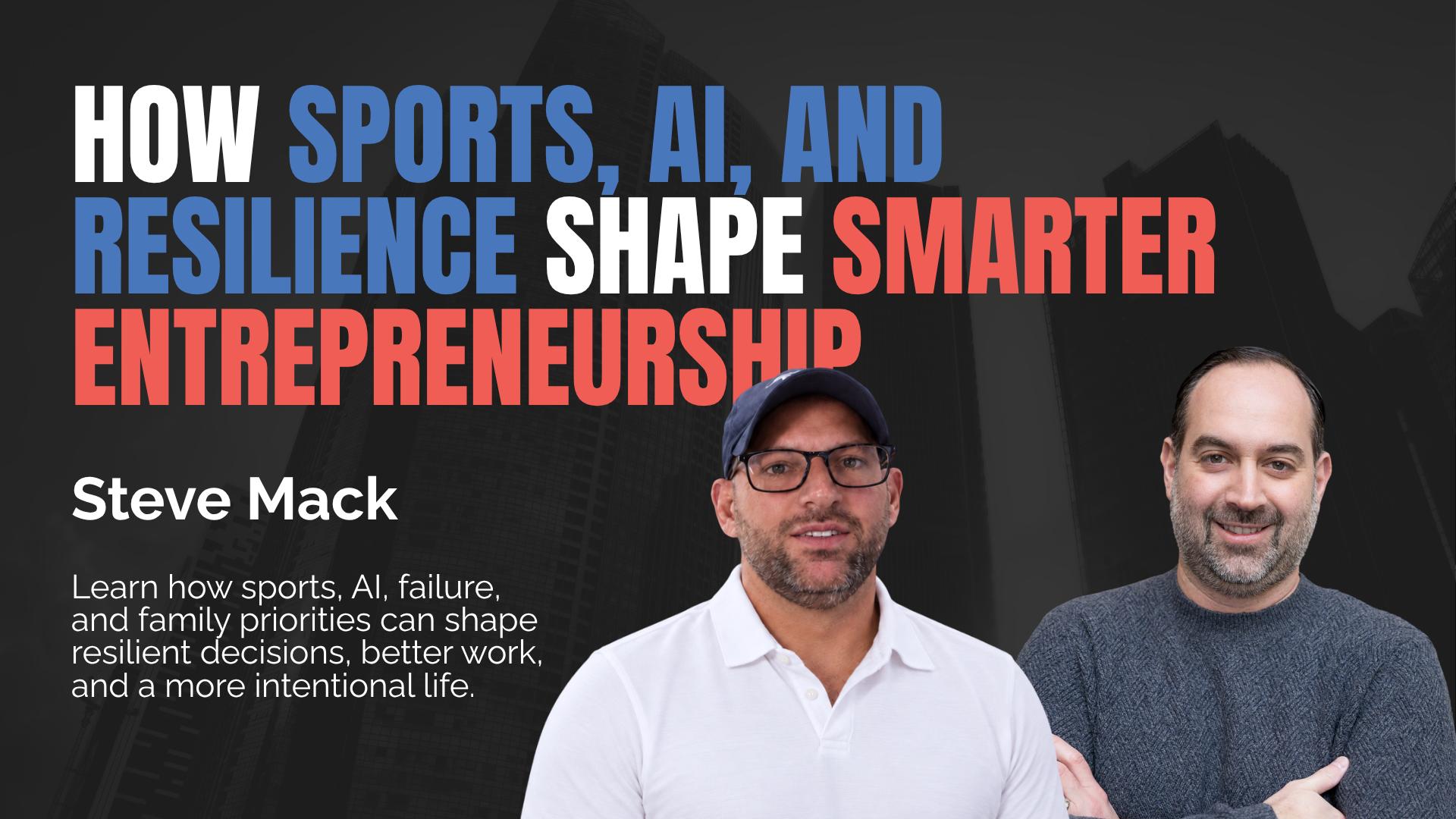
Steve Mack on AI and Better Decisions
We start with Steve’s path from enterprise technology into AI-focused entrepreneurship. He outlines Blue Sky AI’s work across products, placements, projects, and AI-enabled systems. He also explains PHIT, which combines wearable data with coaching for health and human performance. However, the conversation quickly moves beyond tools and into how people should use AI. He favors human-centered systems, clear domains, and practical guardrails. As a result, entrepreneurial resilience appears alongside responsible decision-making, not reckless speed.
Steve on Sports and Failure
Then, we trace his early years in upstate New York, where sports and technology both mattered. Steve played baseball, basketball, soccer, and later college baseball at Drew University. Meanwhile, his parents’ teaching careers reinforced academics and discipline. He connects those experiences to entrepreneurial resilience because sports normalize mistakes, adjustment, and repeated effort. Therefore, failure becomes useful when you learn quickly and move forward.
Building Work Around Family
Later, the conversation turns to the tradeoffs behind career choices. Corporate consulting brought opportunity, travel, and broad experience, but it also pulled time away from family. So, Steve chose entrepreneurship partly to control his schedule and protect time with his children. He describes Blue Sky AI as a lifestyle business, not a race toward an exit. Still, entrepreneurial resilience matters because freedom requires judgment about clients, projects, and personal limits.
Mack on Lifestyle Business Choices
Next, we explore how sports, coaching, and parenting shaped his leadership style. He values trying different activities, finishing commitments, and learning without dwelling on mistakes. Because setbacks are inevitable, entrepreneurial resilience depends on staying level through both wins and losses. He also shares why time with family carries more value as children grow older. Ultimately, that perspective changes how he measures a good career and a good life.
Systems That Keep Progress Moving
Finally, Steve shares the systems he uses to stay focused. He combines current AI tools with simple habits like journaling, notes, whiteboards, and task lists. In addition, he uses EOS to clarify quarterly priorities and longer-term goals. He also delegates finance, reporting, and administrative work when that protects higher-value time. For us, entrepreneurial resilience becomes practical through better systems, clearer priorities, and faster course corrections. The episode closes with a simple idea: keep learning, enjoy the ride, and spend your time where it matters most.