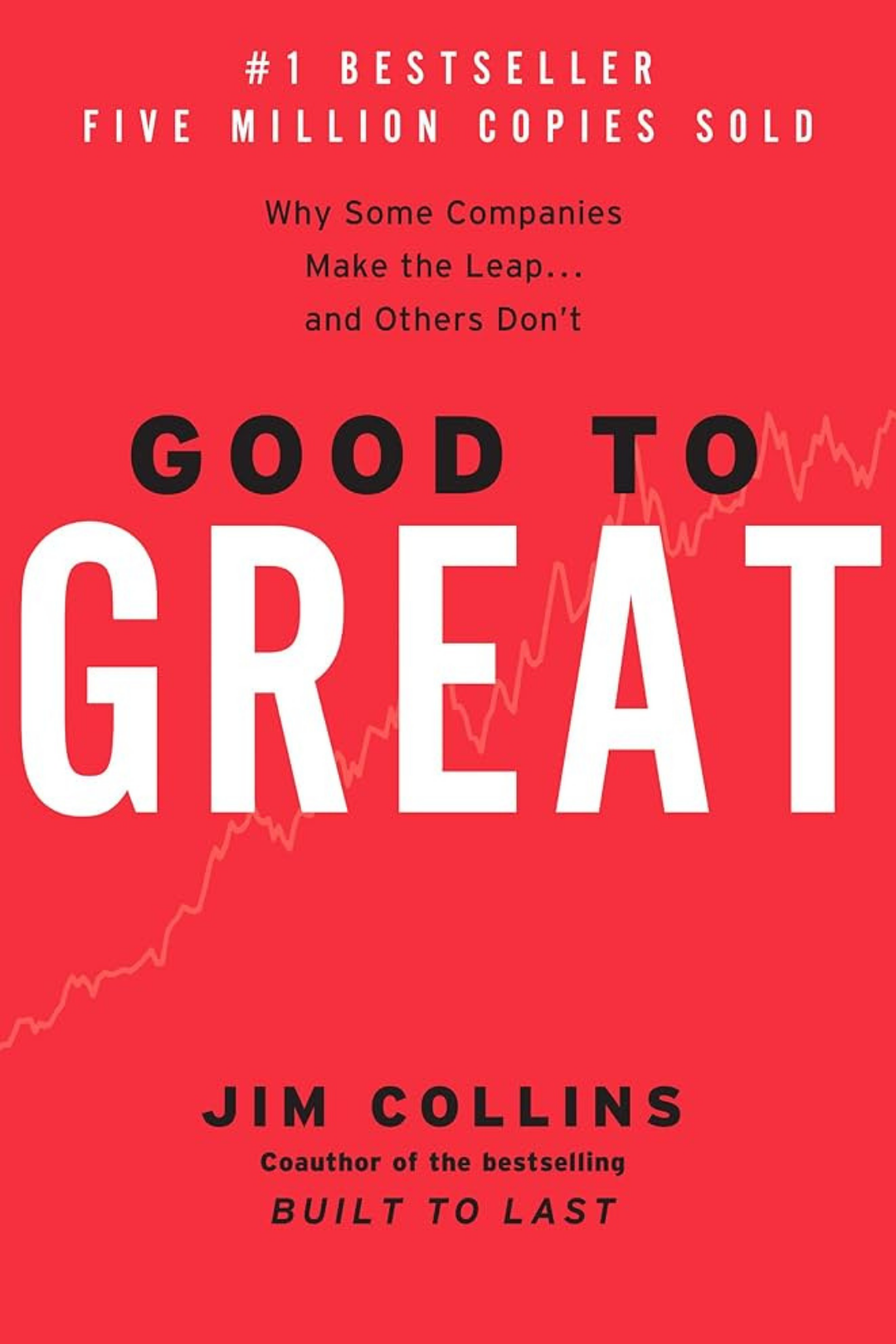
Good to Great: Why Some Companies Make the Leap… and Others Don’t isn’t exactly a book you’d find trending on TikTok or sitting on a freshman dorm desk next to protein powder and a PS5 controller. But Jim Collins’ classic business book has a wild amount of wisdom packed in for young men trying to figure out what it takes to not just do okay in life, but actually become great at something and stay that way.
You don’t have to be running a company to get it. The same patterns that make a company “great” are the same ones that turn a regular dude into someone who walks into a room and gets noticed for all the right reasons. If you’ve ever felt like you’re meant for more but can’t quite get traction, this book wasn’t written for you but it might as well have been.
Growing up today means juggling chaos. Career stuff, social life, figuring out who you even are when nobody’s watching. You’re told to stand out, hustle harder, do more. But maybe it’s not about more. Maybe it’s about doing the right things, really well, for a really long time.
Why young men hit walls on the way up
- You try to do everything. That burns you out before you make real progress.
- You chase hype. But hype fades. Discipline doesn’t.
- You think being “busy” means you’re moving forward. Not always true.
- You look for motivation. But greatness is built by systems, not sparks.
- You think you need to be perfect. But “good enough” consistently beats perfection sometimes.
- You follow people who sell shortcuts. Collins sells no fluff. Just hard, true patterns.
Ditch the superstar myth that’s not how greatness works
One of the first gut-punch truths in Good to Great is that greatness doesn’t come from a genius CEO or some gifted prodigy who saves the company. It’s not about charisma. It’s about humility and willpower showing up every day, behind the scenes, building something solid.
This flips a lot of what young guys believe. You’re told to be loud. Be bold. Be the alpha. But Collins’ research found that the best leaders and by extension, the best performers in any space are the quiet grinders. The ones who get it done when no one’s looking. The ones who care more about results than attention. Think less Elon Musk, more Tim Duncan. Less peacocking, more precision.
There’s freedom in that. You don’t have to be the loudest or smartest guy in the room. You just have to keep showing up, getting better, and refusing to quit when it gets boring.
One story: stuck at “good,” afraid of “great”
Imagine this: 24-year-old guy, just got out of college, decent job, makes enough to not panic every month. Not bad, right? But also not great. He’s coasting. Spends his evenings watching Twitch, weekends partying a little, scrolling a lot. He keeps telling himself he’ll “figure it out soon.”
He has no feedback loop, no system for getting better, no clear picture of what “great” even looks like for him. He’s doing fine. But deep down, he knows he’s wasting time. He starts reading a book his older cousin left on the couch: Good to Great. Random. He flips through. Stops at the chapter on the Flywheel.
That chapter hits different.
The idea that you don’t need one massive breakthrough, just a consistent push, over and over, until the momentum starts to roll. That concept sticks. He starts doing one thing every day toward something he wants: saving money, hitting the gym, learning code, whatever. Six months later, the flywheel is moving. A year later, he’s unrecognizable. Not because he had one big break. Because he built it.
Start thinking like a system, not a spark
One of the sharpest ideas from Collins’ research is the concept of the Flywheel and Doom Loop. It sounds like Marvel stuff, but it’s real. Great companies (and people) keep pushing their flywheel until momentum takes over. Weak ones jump from trend to trend, idea to idea, hoping for something fast.
Here’s how you can tell where you’re at:
| Behavior | Flywheel Thinker | Doom Loop Thinker |
| Tries something new | Builds habits over time | Jumps to next big thing |
| Faces setback | Adjusts, stays consistent | Panics, shifts direction |
| Measures progress | Looks at long-term change | Obsesses over short-term |
| Motivation source | Purpose and clarity | Excitement or fear |
| Big picture goal | Built slowly, brick by brick | Constantly reinvented |
Flywheel thinkers aren’t cooler. They’re just more focused. They build things they can actually sustain.
Your habits are more honest than your goals
You can say you want to be great at something fitness, money, relationships, skills but what you do is what counts. Jim Collins calls this the Stockdale Paradox: face the brutal facts of your current reality, but never lose faith that you’ll prevail. That’s not motivational poster stuff. That’s straight-up survival wisdom from Admiral Jim Stockdale, who survived a POW camp for eight years by doing exactly that.
So if you’re 22 and stuck at a boring job, but you want to run your own business, cool. Accept where you are. Then build habits that make that possible. Don’t say you’ll do it “one day.” Pick something this week. Next week. Build from that. Discipline is remembering what you said you wanted when your mood changed.
Try this:
- Block off two hours a week to work on one thing you care about
- Say no to one distraction that steals time
- Track one habit every day for thirty days
- Read one chapter of a real book
- Write down your goal every morning and night
None of that is glamorous. All of that moves the flywheel.
The truth’s not sexy, but it works
Collins’ whole book is packed with research, not hype. He and his team studied 28 companies over five years, hunting for what separated the good ones from the great. The pattern was always the same: not flashy leadership, not luck, not tech. It was systems, discipline, focus.
That applies to your life too. Want to be in better shape? It’s not about the perfect workout. It’s about showing up. Want more money? Not about the fastest side hustle. It’s about mastering one. Want better relationships? Not about pickup lines. It’s about listening better, being real, showing up when it matters.
You don’t need to be special. You need to be consistent.
Got A Book To Recommend?
Send us a message and recommend something you think other young entrepreneurs would benefit from reading!
Greatness Hits Different When You Build It Yourself
- Greatness is mostly boring, daily choices that compound over time
- The Flywheel effect is real small consistent wins create huge momentum
- Flashy doesn’t mean strong; humble persistence builds more lasting results
- Young men don’t need more motivation, they need better systems
- The Stockdale Paradox: face hard truths, but never give up
- Focus beats hype. Simplicity beats overwhelm. Long term beats instant
- You don’t have to be a genius. Just hard to knock off course
Nobody hands out a map for this. But books like Good to Great leave clues. Your job is to turn those clues into action. Don’t wait for clarity. Build it. One habit, one step, one push of the flywheel at a time. You’re closer than you think.