Confidence Starts With Action
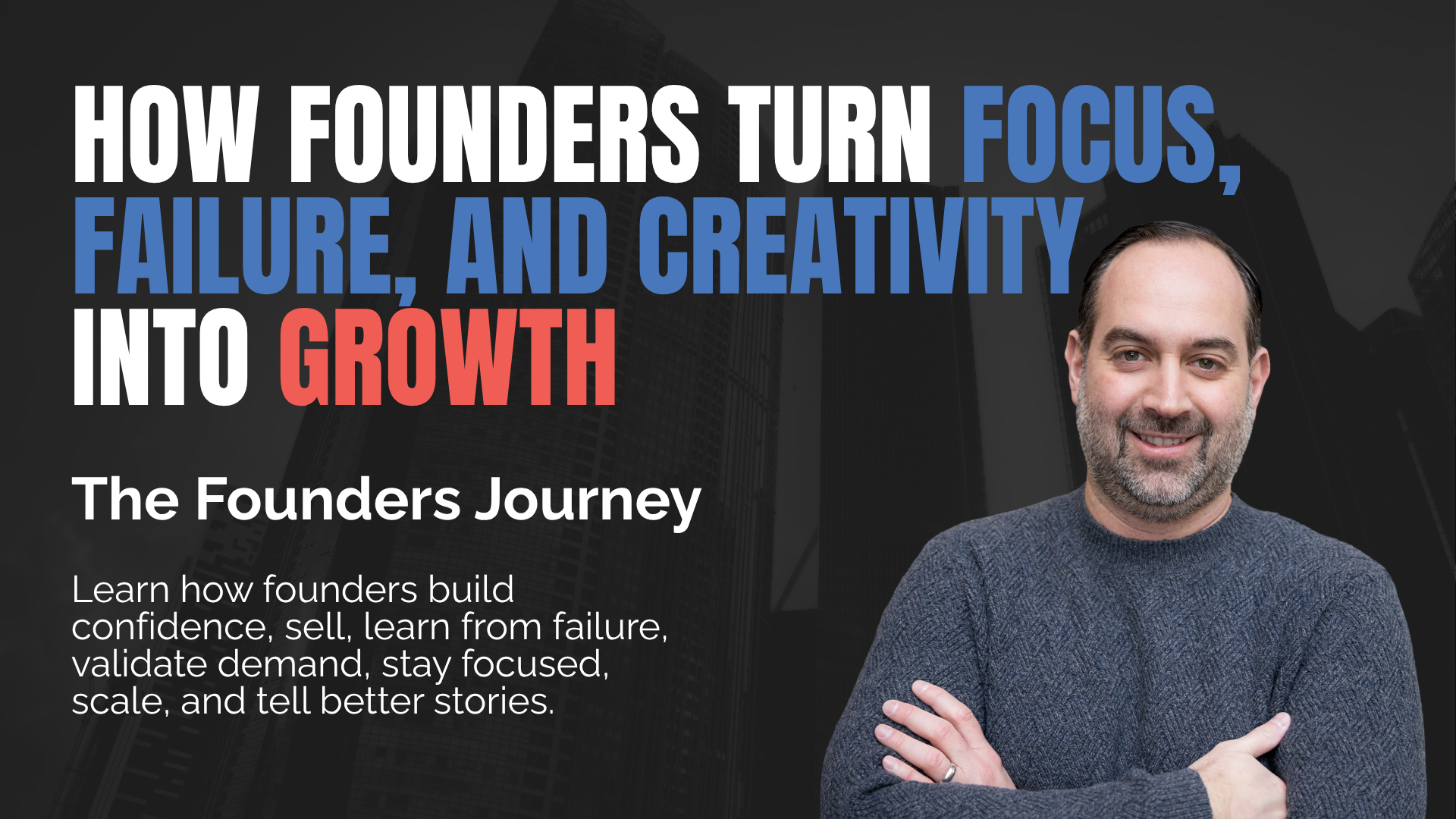
We open with David Wagstaff, who explains how a childhood lemonade stand changed his confidence. First, the lesson isn’t that entrepreneurship starts with perfect skill. Instead, action creates experience, and experience can reshape how you see yourself. That founder mindset begins with doing the work before you feel fully ready. He also shows how luck can create momentum. However, he never treats luck as a substitute for effort or creativity. That’s what the Founders Journey is all about.
Ownership Requires Sales
Allen Kopelman shifts the founder mindset toward ownership, work ethic, transparency, and sales. Next, he explains why employees should treat a business with care, even when they don’t own it. He also argues that founders can’t avoid selling. Because customers don’t appear automatically, entrepreneurs must learn how to communicate value. His point stays practical. Therefore, sales becomes a core operating skill, not a separate department’s problem.
Failure on The Founders Journey Needs Reflection and Purpose
Alex Jekowsky frames failure as a process for learning, accountability, and better execution. Meanwhile, Kevin Siskar connects founder mindset with purpose, passion, and founder market fit. Alex argues that failure matters only when you study what happened and change what you do. Kevin adds that founders need enough personal commitment to keep going when the work gets difficult. Together, they push past simple motivation. Instead, they emphasize reflection, mission, self-awareness, and deep knowledge of the problem.
Customers and Focus Decide What Survives
Kobi Simmat brings the founder mindset back to customers, cash flow, and validation. He argues that customers should fund growth whenever possible. Then, David Kidder explains why focus compounds into value over time. He warns that too many options can produce mediocre work and unnecessary complexity. Likewise, both conversations favor solving meaningful problems for customers who value the result. Ultimately, progress comes from demand, discipline, and consistent execution.
Scale Needs Structure and Story
Paula Skaper expands the founder mindset into leadership systems, customer obsession, and foresight. She explains why leaders need structures that support growth without losing sight of changing conditions. Finally, Park Howell shows how storytelling helps people understand a business journey. He connects the hero’s journey to customer journeys, founder journeys, and clearer communication. As a result, the episode closes on a wider lesson. Strong businesses grow when founders learn, focus, serve customers, adapt, and explain why their work matters.