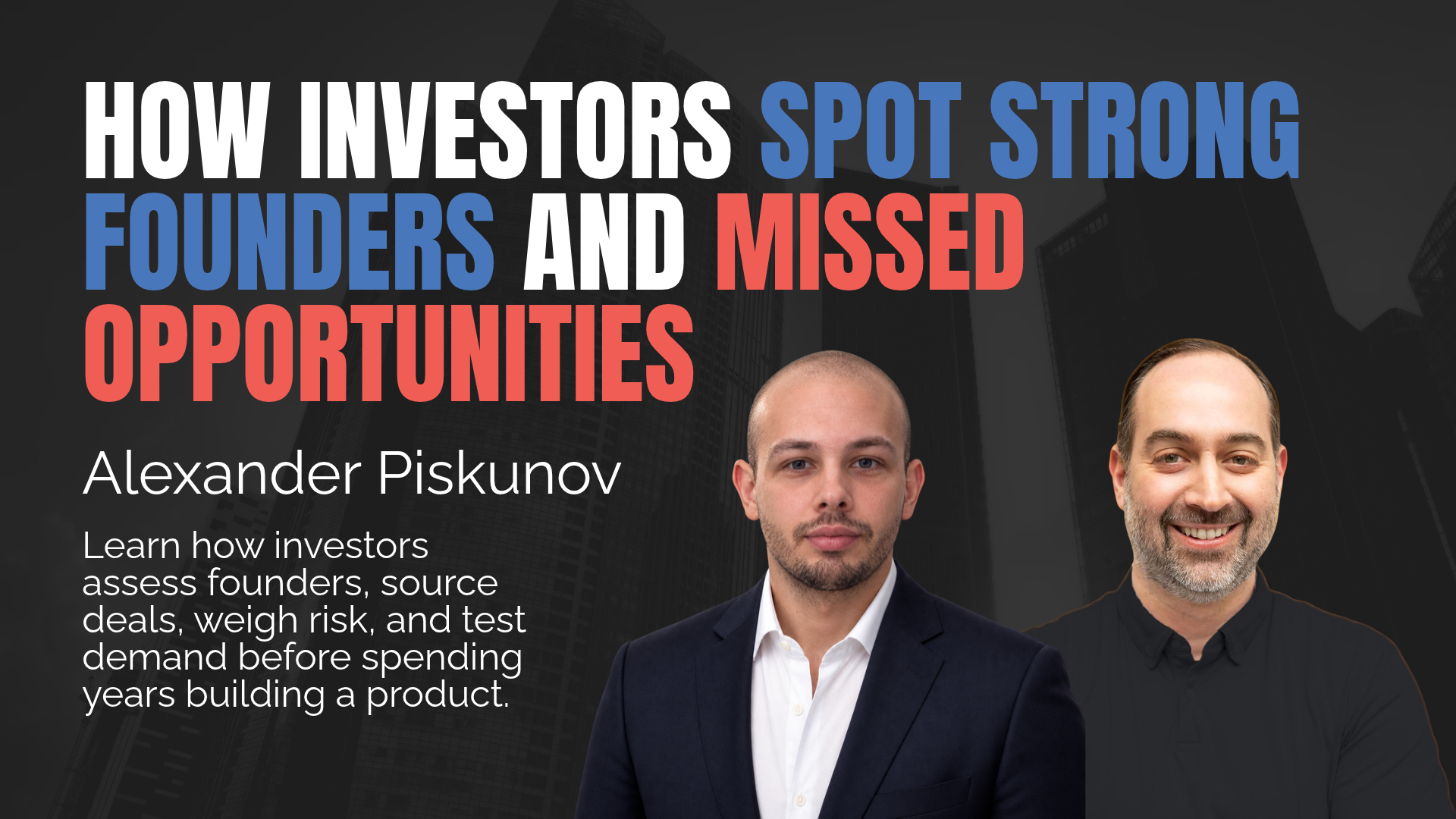
Alexander Piskunov on investing across markets
Alexander Piskunov advises governments on innovation and investment across emerging markets. In Pakistan, he helped explore digital skills, infrastructure, foreign investment, and support for technology founders. His decade in funds informs his angel investing. At the same time, founders need support to reach wider markets.
How Piskunov assesses companies
For Alexander, angel investing starts with relationships. Rather than rely only on databases or conferences, he built networks across markets. Then, he used those connections to assess teams, competitors, and trends. This approach informs his angel investing decisions. He says early and later stage deals call for different questions. In addition, investors should learn how customers solve problems today.
When a founder says a product has no competition, investors should ask what people do now. Even without a direct rival, traditional methods may solve the same need. Therefore, founders should prepare for investor conversations and explain their advantages. Those advantages may come from marketing, distribution, partnerships, or a clear path to market.
Lessons from Alexander’s global investing work
The conversation explores fund structures, timelines, and exits. Deep technology companies can need six to ten years before a meaningful exit. Meanwhile, secondary sales or acquisitions may return money sooner.
Alexander moved from Russia to boarding school in the United Kingdom. He later studied at King’s College and Cambridge, then entered investment banking and private equity. Working with company leaders exposed him to hiring, growth, and team challenges. As a result, he learned to negotiate across cultures. Mistakes sharpened his angel investing judgment. His angel investing also taught him that investors sometimes miss promising companies.
For founders, he recommends planning through the next fundraising round, especially in deep technology. Rather than spend too long building, test demand with an early product, letters of intent, or paid pilots. In turn, that evidence can guide development and attract funding.
Finally, Alexander sees artificial intelligence as useful for organizing public financial data. However, deal sourcing and diligence still need human judgment. AI can support portfolio reporting, while other investing tasks remain harder to automate. He remains optimistic about advances and raises questions about sharing personal data with AI.