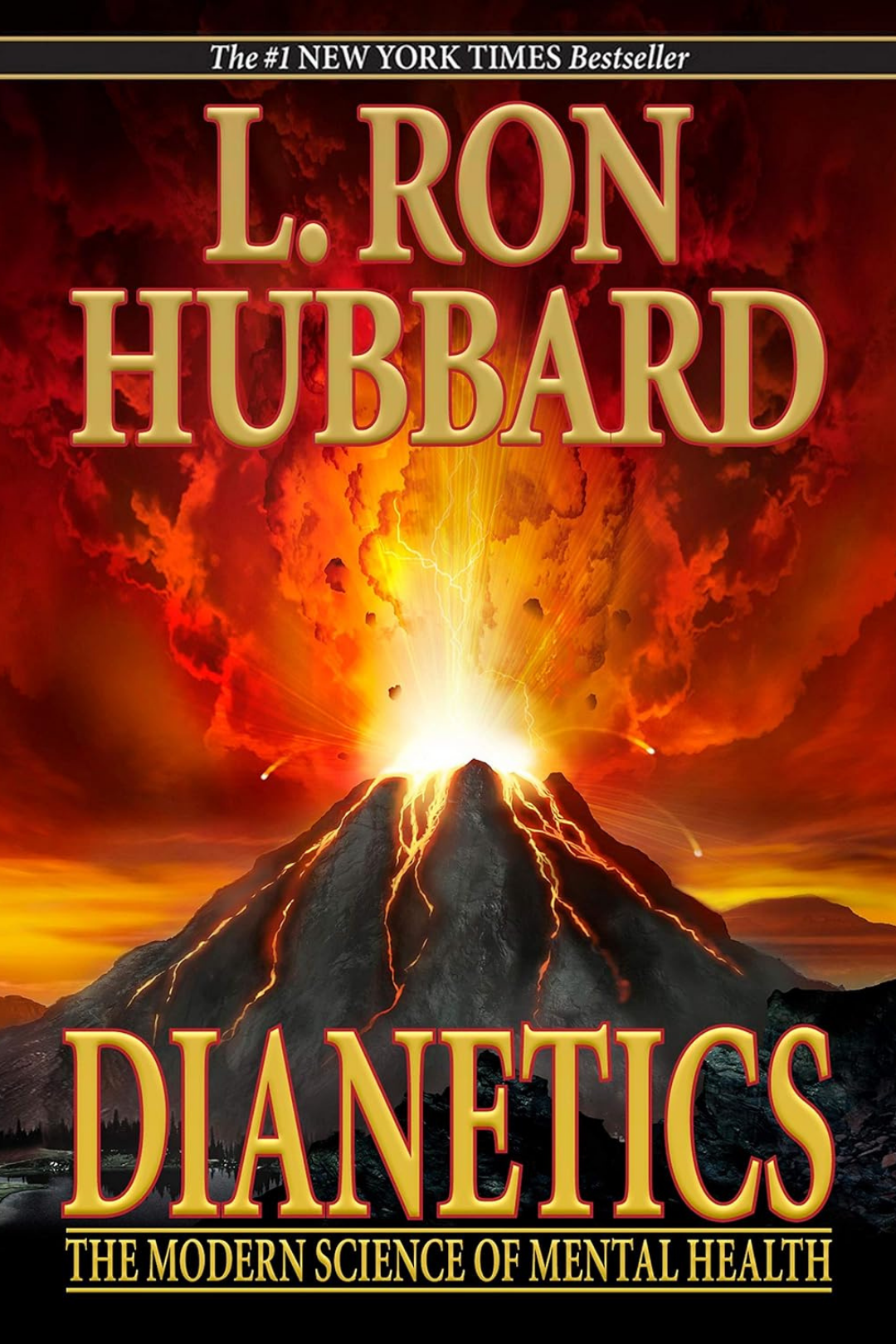
The first time you hear someone mention Dianetics, it probably sounds like a made-up word from a sci-fi novel. But then you find out it’s not only real, it’s one of the most talked-about and controversial self-help books ever published. And depending on who you ask, it’s either life-changing or cult-level weird.
Here’s the thing: whether you’re a skeptic, a seeker, or just book-curious, Dianetics is the kind of book that grabs your brain and holds it hostage for a bit. Not with flashy quotes or punchy chapters, but with a deep dive into how the mind stores pain and how that pain shapes your life long after you’ve forgotten it even happened.
You don’t need to agree with everything in it to feel the weight of what it’s trying to say. This book asks you to take a hard look at the noise in your head and then dares you to do something about it.
What You’re Really Getting Into With This Book
- Dianetics says your unconscious pain runs your life
- You’ve got a “reactive mind” that stores trauma
- Most of your bad decisions aren’t fully your fault
- Traditional therapy doesn’t go deep enough, according to this
- Painful memories create triggers even if you can’t recall them
- There’s a technique called “auditing” that’s supposed to clear that pain
- It’s not just mental. These buried moments affect your body too
- Reading this might freak you out before it frees you up
Your Thoughts Aren’t Always Yours
There’s this wild idea in Dianetics that a huge chunk of your behavior isn’t really coming from you. It’s coming from a part of your mind that records trauma and replays it without your permission. This is what the book calls the “reactive mind.”
It kicks in during moments of pain or fear, especially when you’re unconscious or overwhelmed. Say you broke your arm as a kid and someone nearby shouted, “Don’t move!” Fast forward twenty years. You’re in a totally different situation, but someone says the same phrase and boom your body tenses, your brain short-circuits, and you have no clue why. That’s an “engram,” a word the book uses for these hidden recordings.
So if you’ve ever had a panic reaction that made no logical sense, this book claims it can explain why. Whether or not that’s entirely true, it does make you look twice at your own emotional outbursts.
I Didn’t Expect This Book to Get Personal So Fast
I picked up Dianetics thinking I’d skim a few chapters, roll my eyes, and move on. Instead, I ended up calling my mom asking about the time I got a concussion in middle school. Yeah, it gets under your skin like that.
Reading it felt like slowly realizing that most of my worst habits had echoes. Like why I freeze up during conflict. Why I keep repeating the same kind of relationship. Why certain words instantly make me feel small, even though I pretend they don’t. This book didn’t just describe it, it mapped it out.
The weirdest part? It didn’t feel judgmental. It felt like someone finally pointed out that my brain has been working overtime trying to protect me from stuff it doesn’t even understand.
Let’s Break Down This Whole “Auditing” Thing
You can’t talk about Dianetics without talking about “auditing.” That’s the method the book introduces to help you clear out all that reactive mind baggage. It’s kind of like therapy, but the rules are different.
One person listens. One person talks. But the goal isn’t just to vent. The idea is to go back to the exact moments of trauma and talk through them, again and again, until they stop affecting you.
Here’s what that process looks like:
- The listener (called an “auditor”) stays totally neutral
- You focus on a specific painful moment
- You relive it, describe it, and feel it fully
- You repeat the process until it feels… neutral
- Then you move to the next one
- Supposedly, when enough of these are cleared, you reach a state called “Clear”
It’s intense. Some people swear by it. Others say it’s nonsense. But one thing’s for sure: it treats emotional pain as something you can actually remove, not just manage.
Science? Philosophy? Therapy? What Is This Book?
This is where Dianetics gets messy. It reads like science, sounds like therapy, and was written by a science fiction author. Critics call it pseudoscience. Supporters say it’s the only thing that worked when everything else failed.
To give you a better sense of where it fits in, here’s a quick comparison:
| Approach | Focus | Tools Used | Outcome Promised |
| Therapy | Managing symptoms and emotions | Talk, CBT, meds, etc. | Coping, gradual improvement |
| Meditation | Observing thoughts, calming mind | Breath, focus, stillness | Presence, clarity |
| Dianetics | Erasing trauma at its root | Auditing, memory recall | “Clear” state, full control |
Is it science? Depends who you ask. But it definitely tries to create a repeatable method for understanding and overcoming personal pain, and for some people, that’s enough to try it.
So What’s the Catch?
This book doesn’t exist in a vacuum. It’s tied to a much bigger movement Scientology. Whether or not that colors how you view the book is up to you, but it’s worth mentioning. For many, Dianetics was the entry point into something much larger, with beliefs and practices that extend far beyond self-help.
Still, the book itself stands alone in a lot of ways. You can read it, apply its techniques, and never go further. But the moment you look it up online, you’re going to see both passionate praise and sharp criticism. That tension has followed this book since 1950, and it’s not going anywhere.
If You’ve Read It and Feel Weird Now, That’s Normal
This book isn’t a light read. It asks a lot. It doesn’t ease you in. But it leaves you with something rare: a challenge to face your mental patterns with surgical focus.
You might love it. You might argue with it the whole way through. But if you stick with it, you’ll definitely start noticing your own mind in a different way.
Pulling the Mental Plug: What Stuck With Me
- Your unconscious mind stores pain like a tape recorder
- Triggers often come from long-forgotten moments
- Dianetics claims trauma can be erased, not just managed
- Auditing is like emotional excavation, not casual therapy
- The goal is reaching “Clear,” a state with full mental control
- This book isn’t light reading, but it’s a bold one
- There’s controversy, but also clarity for those who connect with it
- You don’t have to believe it all to get something from it
Read Dianetics with your guard up and your curiosity open. It might not give you peace, but it just might hand you the tools to start making sense of what’s always felt off inside your head.